
Sunday, November 28, 2021

Q&A With Police Spokesman Bruno Shioso

The National Police Service Spokesman Bruno Shioso fields questions from the public via Sunday Nation.

This month, some police officers will have to source for advances to supplement their income after receiving slashed salaries. This salary and promotions problem has lingered since 2018. Are you concerned that the move to cut their salaries will affect their morale and increase cases of officers engaging in criminal activities? Is there something being done to address this matter once and for all? Evans Njogu, Utawala

I do empathise with the affected officers since no one can bear with diminished earning capacity. That said, this is a legal and policy issue rather than an administrative one. It is also a cross-cutting issue affecting the National Police Service Commission (employer), NPS, Salaries and Remuneration Commission, Judiciary and other actors such as the Treasury.

Therefore, it is well beyond my pay grade or NPS’ intervention. I invite you to familiarise yourself with the Court of Appeal ruling in Civil Appeal No. 352 of 2019 (delivered on 23/09/2021). In summary, the Court of Appeal ruled against the position advanced by the aggrieved officers. That, unfortunately, is the position that we must not only respect but enforce too.

When the current Inspector-General of police took office, he published a Gazette notice detailing those who have right of way on Kenyan roads. He identified five categories with less than 30 offices. The publication of this notice brought hope that finally the anarchy on roads would be addressed. Unfortunately, this notice ended up being a public relations exercise. Today, observance of traffic regulations is voluntary. Drivers of government and county vehicles along with those of public corporations have been joined by MPs, MCAs, and county officials in competing with matatus to determine who can be most obnoxious to other road users. What is the NPS doing to restore sanity on our roads? Mike Johan

True, Mike, the policy was published by the IG and it is still valid and in force. Your concern, which I wholeheartedly agree with, tells of a much bigger story about the collective character of Kenyans than it tells on the capacity of police to enforce the laws and policies. I think first we as Kenyans and also road users need to cultivate a basic sense of road discipline, courtesy and good manners generally. This should be the preventative baseline , rather than focusing on more laws and police actions. Or are we going to blame the police for our bad road manners too?

Why did the Anti-Terrorism Police Unit (ATPU) raid the headquarters of the Prisons Service in commando-style to arrest the former Prisons’ boss? Was all that force necessary? Don’t you think the act was humiliating both to the outgoing boss and the image of the correctional service at large? Andrew Maranga Ratemo, Nairobi

Andrew, firstly, ATPU never “raided” Prison’s headquarters, but responded to a distress call, whose specifics I would not get into now. Their posture as seen on TV was merely an issue of police techniques, especially when responding to a call without having the benefit of the details upfront.

In developed countries like the USA, show-of-force is a standard police procedure when responding to all calls, including of a lost pet! Officers were simply on high alert and weren’t taking any chances. And as a correction, the Commissioner-General of Prison was never arrested.

There were several versions of the chaos that erupted during DP William Ruto’s recent campaign tour of the Nyanza region. That the DP gave out money to be shared among the boda boda riders, but some people made away with it, hence leading to chaos; and that the police had intelligence reports the previous day indicating that there would be chaos but did not act on them. Which version should we believe? Erick Ole Agade, Busia

Erick, when faced with a situation of conflicting official information or narrative, always stick to the police version. Police are authentic, objective and reliable. We don’t have interest in public (political) discourse but pursue only facts as they are.

And let me add that in addition to our mandate of official investigations – which gives us a comparative advantage on the quality of the news we share – we are also well represented at the grassroots so we get first-hand information. Beyond that, we utilise other capabilities, including intelligence, forensics and technology.

Therefore, what we share from headquarters is an outcome of a laborious effort by many actors to feed Kenyans with objective reality. I, therefore, encourage you and others to always trust the police version of narratives since you can always hold us to account.

One of the fundamental principles of community policing is to make the police and the community work together. However, the police force is largely very unfriendly towards community members. What is being done to address this apprehension? David N. Ndungu, Kilifi

True, David. This is one area greatly responsible for tensions in the police-community relations, hence impacting negatively on good policing outcomes. It is an area police reform is focused on, and that is why community policing is a big plank of the ongoing police reforms. We are addressing the drivers of this unfortunate reality, and we shall in the fullness of time bring police and the public together.

We are fully aware we can’t be effective without the full cooperation of the public. You saw the role the public played recently towards the recapture of the prison break trio. That is the direction we aspire towards. But it is a process.

Reforming such a big organisation with an entrenched culture is no mean feat. The USA has been reforming for more than 60 years now, and still have trust deficit issues. Our reform journey is still in infancy – a mere 10 years – and we are acknowledging our weaknesses and building on our strengths.

We need the support of the public, first by giving us the benefit of doubt, then working with us. So much is already happening in the counties where frontline policing is taking place.

In Nakuru County for instance we have a football initiative to bridge to normalise relations. In Tran Nzoia, we have a senior commander who employs singing to reach out to disadvantaged kids. And much more policing innovations are happening with great impacts.

The IG banned the erection of roadblocks without approval. While the physical roadblocks are gone, the police still man those spots with the sole purpose of extorting money from motorists. When are we going to see the end of this? David N. Ndungu, Kilifi

The roadblocks policy is well communicated and enforced. Roadblocks should be for a specific purpose and time-bound. Roadblocks are meant to detect criminal offences and not traffic violations. Traffic operations should be mobile, not static.

Therefore, whenever you come across lone officers on the road stopping cars, be a good citizen and make a report, even on the NPS Twitter account and action will be taken. This is an area the IG and Deputy IG of the Kenya Police Service are very passionate about.

All roadblocks and traffic checks must be sanctioned by local commanders, who are held strictly accountable to the IG and DIG KPS over the performance of their officers.

As police continue to attract negative publicity, including cases of brutality, extrajudicial killings and corruption, Kenyans ask themselves whether the much talked about police reforms ever took place or bore any fruits. Sir, what is your take on these observations? Komen Moris, Eldoret

Dear Komen, police reforms are not only real and ongoing but the greatest strategic agenda ever undertaken in the history of our police. Reforms don’t easily happen, even with the best corporates. It is a great feat that NPS has soldiered on this far. If you doubt this, just try to reform your own life or even family and see how hopeless it gets!

We have a clear roadmap, and have our priority areas right and well mapped out. We also have the buy-in of the rank-and-file who are keen to turn the page for the better. So far, much ground has been covered, but we still keep our focus on the prize; to bring the police and public to the same policing table to design joint interventions on security, peace and safety. And in all this, we remain grateful to the government through the Ministry of Interior for their unwavering support The Government is keen to see NPS succeed in this transformative effort.


source https://nairobiwire.com/2021/11/qa-with-police-spokesman-bruno-shioso.html

My Vision is to Restore Nairobi to “A Place of Cool Waters”

Dr Elizabeth Kimani-Murage is a senior research scientist at The African Population and Health Research Center (APHR).



The researcher speaks about her vision for Nairobi, her journey and more.

You recently won the global 2050 Food Systems Vision prize. Your vision for the award is to restore Nairobi to “A Place of Cool Waters” – A food secure, healthy, environmentally friendly urban space, where all people live in harmony and peace in the spirit of “Ubuntu”, what does this mean?

This vision is to restore Nairobi to its original place – a place of cool waters  — through a transformative, regenerating and human-centred food system. Nairobi (Enkare Nyirobi) was named as such by its indigenous inhabitants, the Maasai people, meaning “the place of cool waters” referring to cool rivers flowing in/through it.

Nairobi was clean and green and the Maasai people grazed their cattle in it. It has also been referred to as the “Green City in the Sun”.

Nairobi today is a degraded urban space. The green spaces have generally been replaced by a concrete jungle that is already encroaching into neighbouring counties like Kiambu County that feed it. A majority of its residents live in informal settlements characterised by high levels of food insecurity, malnutrition and poor health. This is despite the fact that a lot of food is dumped in dumpsites, where many urban poor scavenge for food, while others sleep hungry.

Capitalism has led to commodification of food so much so that if you do not have money, you do not have food. Further, due to food commodification, food sold in markets in the city, majorly coming from rural areas, is not safe as it is grown through unsafe use of agricultural chemicals to increase yield.

Through various strategies under the Vision, we will promote access to adequate and healthy food so that people feed themselves in dignity. We envision that all this will lead to a food-secure and healthy environment, where people live in harmony and peace, in the spirit of Ubuntu.

What challenges do you go through during your work and how do you solve them?

Ever heard of the saying – “Publish or Perish” associated with academic institutions? Career progression for a researcher depends a lot on their academic productivity. One has to often conceptualise new ideas, raise funds to implement the ideas, publish the new evidence from the research, and engage policy with the evidence. That is the cycle.

How has the journey been?

In my journey towards where I am today as a researcher, I have published tens of research publications. Sometimes you submit a paper to a journal and it gets rejected. You have to revise the paper and resubmit to another journal – that is the life of a researcher – and one needs to know this well, so as not to give up along the journey.

Another challenge is work-life balance. I often have to work more than 100 per cent of time to finish on deliverables, and I have a family to take care of. Balancing all that is often a challenge. I have learnt to deal with this through proper leadership – I have been trained and mentored on leadership — proper planning, prioritisation and delegation. These are key in success.

What gives you the greatest fulfilment and encouragement?

Being able to inform and drive change in people’s lives through my work gives me a lot of fulfilment and encouragement. Through my research work I have informed policy formulation and implementation in Kenya to promote health and wellbeing of Kenyans and Africans in general. These include policies around the baby friendly community initiative, workplace support for breastfeeding and human milk banking.

I am particularly happy about the Zero Hunger Initiative that I have initiated at APHRC, based on the Food Systems Vision. This is aimed at promoting freedom from hunger and the right to adequate food for people in urban areas in Kenya, and eventually the wider Africa, while promoting a healthy environment in urban areas.

Growing and mentoring the next generation also gives me a lot of joy and fulfilment. I have mentored many young people in research, through supervision as colleagues, internships, and supervision of masters and PhD students. I have also mentored young people who work in urban poor settings as change agents in their communities.

What advice can you give to up-and-coming women who are interested to take after you?

Diligence pays! I will tell them what my mum always told me, “Nothing good comes along easily”, meaning that one, and particularly a woman, has to work hard(er) to make it and thrive in their careers and in life generally. I single out women because it is only women who have to carry babies for nine months in their wombs, who breastfeed babies among many other life responsibilities. These (extra) responsibilities are usually not taken care of when it comes to academic requirements, promotions at work, and grant applications among many career responsibilities.

What do you enjoy most about your work? And why?

Freedom to think, freedom to execute work, freedom to influence. The work of a researcher provides a lot of freedom and opportunity. A researcher is often their own boss – they decide what projects they initiate. This is because they write their own proposals and make grant applications for the projects they want to implement, design the projects and execute according to their plans. My workplace is a good work environment and it promotes this freedom.

What is your ideal day like?

Currently, my day is long and full! I am a mother, a wife, a researcher, a leader, and a student. But all fit in the day.

What drives you?

I am passionate about justice! I have a vision for a just world; where human rights are protected, respected and fulfilled; where no one sleeps hungry or relies on unhealthy food; and where people live in harmony and peace, in the spirit of Ubuntu.

Women you look up to?

I really admire my mum, not just because she is my mum – but because I have learnt a lot from her. She has shared a lot of wisdom with me, which guides me in my daily life. I always find myself using the wisdom she shared with me when I was growing up. She often used Kikuyu adages to inspire.

Dr Catherine Kyobutungi has influenced my path a lot. She is my big boss, an intelligent, effective and gracious leader. She has made a lot of impressions on me through her way of leading and through her words. Then there’s Prof Paula Griffiths in my research work

Future plans?

I am building a legacy of justice in future; I see myself promoting justice –in different ways — through the kind of work I do today – action oriented research and programmes especially to promote freedom from hunger and the right to adequate food for all – Universal Food Access. I see myself teaching law part time in a university in future, focusing on human rights, particularly the economic, social and cultural rights.


source https://nairobiwire.com/2021/11/my-vision-is-to-restore-nairobi-to-a-place-of-cool-waters.html

Rev. Lucy Natasha Gets Engaged to Indian “Prophet”

After much speculation about her love life, flamboyant city preacher Reverend Lucy Natasha over the weekend unveiled the love life, one prophet Stanley Carmel.

In doing so, Rev Natasha also marked her engagement in a colourful event at the Boma Hotel, Nairobi on Saturday evening.

Taking to her social media accounts, the founder of Empowerment Christian Church (ECC) announced her engagement, writing: “I said Yes!”

She added: “He has made everything beautiful in its time. Ecclesiastes 3:11.” 

In another post, the Oracle of God preacher wrote: “My Love Carmel may the rest of our life’s journey together will be filled with God’s grace, blessings, provisions, protection and guidance. We shall continue to Serve God & Bless Humanity.”

Rev Natasha and Prophet Carmel have been secretly dating for more than a year. In a past interview, she described him as the perfect person.

“It has taken a long time but by the Grace of God, I can say I am in a good relationship.

“I am also not perfect but this is the person God has ordained for me. He is a friend and love is about two imperfect people coming together. This man, I feel like he is the perfect person. He is someone I can talk to if I have something good I need to share. When I am in a struggle, this is the person. I don’t want to talk much but he is a good man from a different continent.

“The greatest challenge is that we are in different countries and dynamics are different, but we are trying to navigate and love win. Yes, he is rich, but I am also a bazu and I am not a gold-digger but a gold carrier,” she said.

Rev Lucy also shared a large portfolio of pictures with Prophet Carmel. Check them out below.


source https://nairobiwire.com/2021/11/rev-lucy-natasha-gets-engaged-to-indian-prophet-stanley-carmel.html

My Hustle -From Cyber Café Attendant to Real Estate Consultant

Nyambura Kinyanjui was a cyber café attendant before she landed a job as a secretary in a real estate firm.
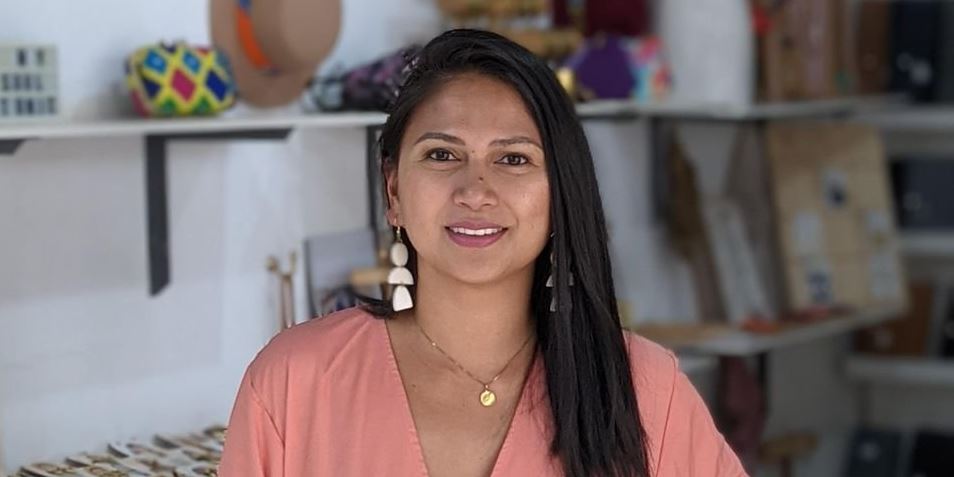
At the real estate firm, she learned the ropes of real estate management and later resigned to start her own management and consultancy company dubbed Diligent Realtors in Thika.

Here’s her Hustle story.

Humble beginnings

After school, I was first employed in a cyber café as an attendant earning Sh3,500 monthly. This narrative was to change for the better. While on duty, one of the customers informed me of a secretary job in his real estate office. I resigned to join the firm. I worked as a cyber café attendant for eight months and as a secretary for six years. The latter had better pay compared with the previous one.

Why the real estate and consultancy business?

Throughout my six years of experience at the real estate firm, I learnt a lot that inspired me to start and own a real estate company. Seeing it as an industry that was growing fast, and having witnessed the success stories of other players in the industry, I ventured into the male-dominated field. I knew it was worth the gamble, took out my savings and registered my company, Diligent Realtors. I can say the gamble was worth it.

What does Diligent Realtors entail?

The firm deals in real estate management and consultancy. I got my first client to manage his three apartments while still a secretary. It was then that I quit to fully focus on my company.

 How much did you make from your first client?

It was not much but it looked impressive away from what I was earning as a salary. I made Sh30,000 which I used to set up a small office in Thika town and quit employment.

How has the real estate sector been like and the challenges?

There is much to be done in this sector. It is an industry that is always evolving based on diverse factors ranging from new technological innovations to design trends and structural growth. This calls for creativity and collaboration with experts and developers.

Despite tough government regulations, there are a lot of challenges in this sector, especially in property management, like a case where a client expects you to bank rental collections as per your agreement with them but some tenants have defaulted or delayed making payments. To bridge the shortfall, you use your savings or even take a loan to meet the clients’ demands. You want to have loyal clients who trust you than lose them to your competition and you’ve to make such sacrifices.

How long have you been in this business and how do you charge for consultancy?

It’s been five years, now managing properties and offering consultancy services. In collaboration with other real estate developers, we have ventured into property sales. In real estate consultancy, we have specialised in investment and financial advice to clients looking to buy, sell or invest in the property market. Our charges depend on the type of consulting one is seeking.

Real estate has many facets and requires different and specific knowledge and expertise

What did employment teach you and would you consider employment again?

Being employed is not that bad since one guaranteed pay at the end of the month, but being your own boss is taking risks of the unexpected.

Comparing the period, I was employed to that I have been my own boss, I would choose business and being a job creator since there is much that come with it like management, responsibility, timely decision making and creativity. You don’t grow in employment but in business you do. I would never consider employment again.

How has the business growth been like?

It’s been steady but not without lots of challenges along the way. It began with managing three units and the number has risen to 50 units and counting currently. With the growth came employment opportunities for others. The company currently has 12 staff under monthly salary and other employees contracted on a commission basis.

Which business mistakes do you regret?

I have not made many mistakes worth regretting but I have made a lot of failures like investing in ventures that end up as big losses. I take them as a challenge to move to the next step.

How much can the business generate monthly?

With the changes in the industry, you can’t have a correct estimate but on a conservative end, the company can bank up to Sh200,000 per month after expenses.

Do you invest profits in a different area or reinvest in business?

With business growth and my primary interest being in the real estate sector, most of the profit is channeled back into the business to buy more properties for sale and also grow the company assets and liabilities.

What business lessons have you learned in the process?

In the half a decade in business, I have learned the value of meeting expectations and delivering to a client’s satisfaction. Moreover, we need to mitigate problems as swiftly as possible and consult others in the industry as well as apply advice given.

What business advice can you give?

There comes a time when you will need to look forward to the next step of your business. You do not want to remain at the same level doing the same things, and so you need to make crucial decisions that will determine the trajectory of your business. You should make smart and timely decisions.

To all the budding entrepreneurs, make sure the goals you set are realistic. If they are too big, break them down. It will encourage you as you move along and your ultimate goal should never change. Broaden your horizons and transform that business idea into a brand.

When not in real estate and consultancy, what else do you do?

I’m also in digital farming and the cereals business.


source https://nairobiwire.com/2021/11/my-hustle-from-cyber-cafe-attendant-to-real-estate-consultant.html

Meet Owner of ‘Made in Kenya’ at The Alchemist Bar

Glena De Guzman, 37, is the owner of the Made in Kenya Store at The Alchemist Bar in Westlands, as well as the co-founder of Pink Savannah, a Jewelry brand


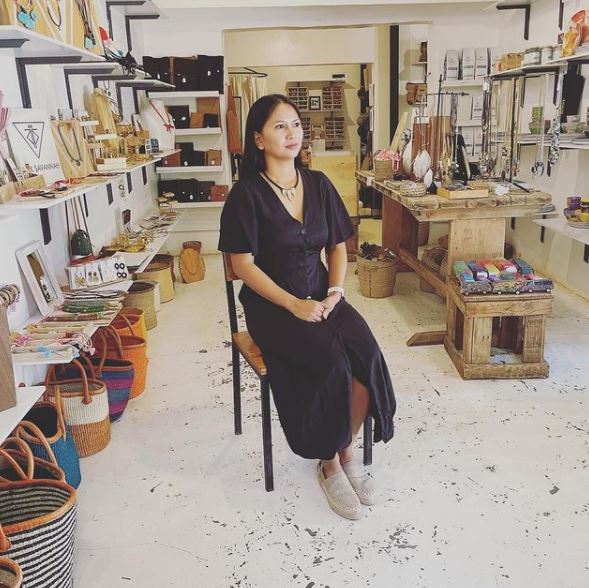
The Kenyan-Filipina got into the art business after dropping out of University where she was studying International Relations and Human Resources.

Glena narrates her journey below:

********************************

“I presently run the Made in Kenya store, where we showcase and sell over 40 local artisanal brands ranging from jewelry and leatherwork to fashion and homeware. For homeware, we have Kangarui who does quirky animal prints on plates, canvas, and pouches. Kapoeta does feather and brass jewelry while Boguk does fun hats embezzled in Maasai beads. Concrete roses do very cute painted denim jackets and onesies for children. We also have a men’s range such as NC Nairobi who make cool new-age fashion for men, such as kimonos. About 80 percent of the brands are women-owned, such as Washindi Naturals who use natural dyes in their soaps and provide economic empowerment to communities around Nairobi. 

We provide a retail store for smaller brands who have small workshops or work from home and SMEs who can’t afford a big space in the malls. My favourite part is working with different artisans and learning their brand story because it’s reminiscent of how my sister Glaiza Guzman and I started our own jewelry brand, Pink Savannah.

I’m a Kenyan-Filipina and have lived in Kenya for about 29 years. My parents moved here with my four siblings when I was eight. After primary and high school, I enrolled at USIU University and studied International Relations and Human Resources. I didn’t graduate as my passion for the course waned. As a child, I had a passion for making friendship bracelets. When we got to university, my sister suggested we start making jewelry. My dad gave us suppliers and urged us to go for it. We discovered that the best place to go is River Road in town. It is magical with the hustle and bustle of everyone trying to get to a place. 

We got our first load of beads and worked on our living room floor to make a collection. We then started looking up bazaars and discovered that a lot was happening in Kenya at the time, from Christmas craft fairs at Ngong Racecourse to Biz Baz events. We applied and when we got in, we needed to make a bigger production line. It’s been about eight years now and we have kept on doing exhibitions and craft fairs. We both had full-time jobs so we would do this on the side, and tried to finish on orders at 4 am. 

My husband and I run an advertising agency called Yellow Agency, and our clients were both corporate and SMEs. I decided to quit about three years ago to focus on the retail part of Pink Savannah. Sometimes I regret leaving because of the stable monthly income I had, but I have more flexibility and time to be more creative and meet people, especially since my children need to be picked up and dropped off at school. 

That’s when the Made in Kenya store idea came in. It was already operational, but the lady who was handling it decided to leave and since I was already a stockist at the store, I took over the business in 2017. I have been growing the business since. I love being at The Alchemist Bar. A survey found out that, any new tourist who comes to Nairobi would visit The Alchemist in a week of being in town. It’s the place to be.

I met a group of tourists from Germany recently, and when I enquired how they got to know the place, they told me that they had Googled it. The Alchemist attracts tourists, expats, and even locals with its good music, drinks, ambiance, and various food vendors. There’s Mama Rocks, Wings Kenya, and a pizza place called Fabio’s.

At the store, there’s a bit of something for everyone. You can find bamboo straws for Sh100, magnets for Sh300, jewelry, and clothing at Sh2,000, with some ranging between Sh5,000 and Sh10,000.

During the pandemic, people didn’t have the spending power that they used to have. We had to close down for three months because our location is at a bar, and we still had staff on salary and couldn’t let them go. We learnt to adapt to selling online as well while offering discounts to draw people. We are currently building our website where we will post up to 1,000 products for people to buy.”

Courtesy: Saturday Magazine


source https://nairobiwire.com/2021/11/meet-owner-of-made-in-kenya-at-the-alchemist-bar.html

Thursday, November 25, 2021

Ndichu Brothers Deny Offering Out-Of-Court Settlement to Murgor Sisters

On Thursday, the Murgor sisters accompanied by their mother Regina Chepkemboi and lawyer Phillip Murgor called a press briefing in which they claimed that they had turned down offers to reach an out-of-court settlement with the Ndichu Brothers.


The Murgors said three lawyers had approached them with offers of an amicable settlement.

“We have been approached by 3 different advocates, one of whom is also an MP. All seeking an amicable out-of-court settlement on behalf of the Ndichu brothers,” they said in a joint statement alongside fellow complainants Samuel Ramdas and Patrick Koech.

According to the statement, Amadi Associates Advocates through lawyer Njenga Kiarie wrote to Lawyer Phillip Murgor asking the sisters to settle out of court saying the incident at the Ole Sereni Hotel in mid-October was a misunderstanding.

The advocate indicated that the Ndichu brothers were willing to pay for the repairs for the damage to the car belonging to Samuel Ramdas.

“We politely rejected all the overtures, and indicated that it was in the public interest that the case proceeds to court,” the statement adds.

However, the Ndichu brothers have denied making such overtures.

“Contrary to what the Murgor Sisters are claiming, our clients have made no offers at all to settle this matter because they firmly believe in due process,” lawyer Edwin Sifuna said in a statement on Thursday.

“As such our position remains that we want to meet these extortionists in court. We will not negotiate with criminals,” he added.

The brothers want the Murgor sisters arrested for assaulting and causing actual harm to one Munira.

The Ndichus further accused the sisters of trying to intimidate the Director of Public Prosecutions, Noordin Haji.

They claim the sisters are using their famous family name to try and influence the outcome of the case.

“The Murgor Sisters must be reminded that the ODPP is an independent office not subject to direction or control of anyone, including famous uncles,” Sifuna said.

Adding: “We demand the immediate arrest of the Murgor Sisters failing which a formal complaint shall be lodged against the DCIO Langata.”


source https://nairobiwire.com/2021/11/ndichu-brothers-deny-offering-out-of-court-settlement-to-murgor-sisters.html

Sonko Summoned to Testify Against Chitembwe Before the JSC

The Judicial Service Commission(JSC) has summoned Mike Sonko to testify against Judge Said Chitembwe.

In a letter signed by Chief Registrar Ann Amadi, JSC directed Sonko to appear before the commission in seven days to record a statement over the videos he has been publishing on social media implicating Chitembwe.

“In the meantime, the commission shall require him to appear in persons at the JSC offices within seven days of service of this matter with a view to recording your statement on the circumstances surrounding this matter,” the letter reads.

The commission noted its attention has been drawn to the video clips, social media posts, cell phone recordings released by Sonko in which Justice Chitembwe’s conduct as a judge has been brought to question

“Consequently, the JSC resolved to initiate proceedings against Chitembwe on its own motion pursuant to the provisions of Article 168 of the constitution,” the commission said.

JSC said it will require Sonko’s personal attendance to testify as a witness in the aforesaid matter which will proceed for the oral hearing on December 14 at 9 am.

At the same time, the commission cautioned Sonko against skipping the summons saying it is an offence to disobey its orders.

“Take notice that pursuant to the provisions of sections 46 part VIII of the Judicial Service Act no. 1 of 2011, it’s an offence for any persons to disobey any order made by the commission or a committee,” JSC said.


source https://nairobiwire.com/2021/11/sonko-summoned-to-testify-against-chitembwe-before-the-jsc.html