Sunday, November 28, 2021

Jane Mugo Links Attack to Kirinyaga Politics

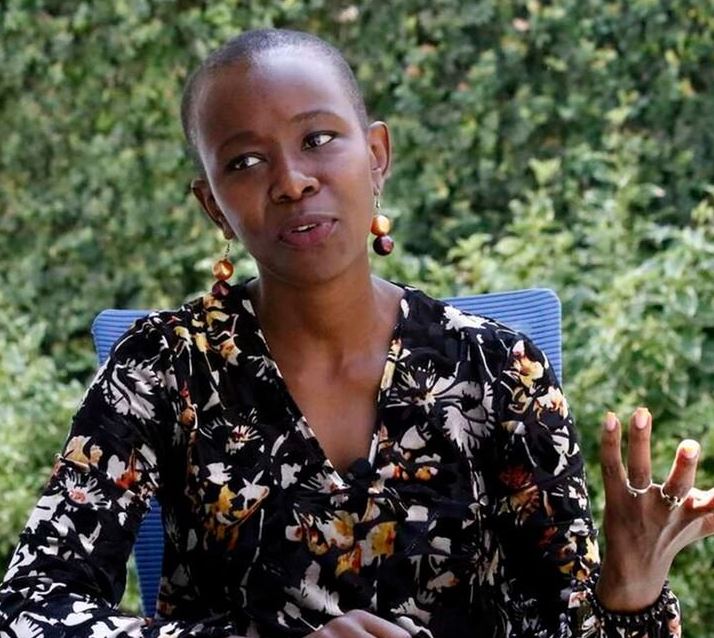
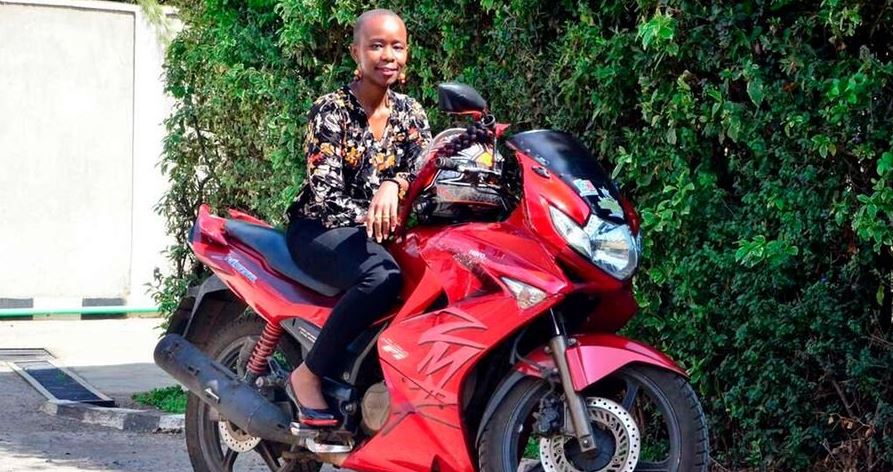
Private investigator Jane Mugo has revealed why she was attacked in a carjacking incident at Burnt Forest area, Uasin Gishu county on Thursday, November 25.

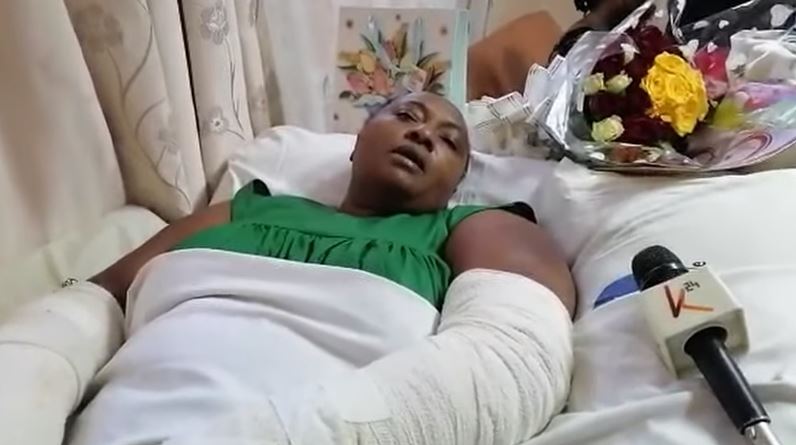
Speaking from her hospital bed in Eldoret on Sunday, Mugo linked the attack to her interest in Kirinyaga County Woman Representative seat in 2022.

The private detective mentioned that one of her abductors asked about her political ambitions in Kirinyaga.

“One of my four abductors asked me what was pushing me into Kirinyaga politics,” Ms Mugo.

At the same time, Mugo said the abduction might be related to a murder case she has been investigating. She said the murder is linked to a police officer in Busia.

According to Jane Mugo, since she started probing the case, she has been receiving threats, with her family advising her to drop the case.

“I have been following up a particular case, two weeks ago I was in Busia and we arrested some suspects of murder with DCI officers. During our investigations we realized that a police officer was also involved in the murder case,” she told a local TV station.

Recounting her ordeal, Jane Mugo said she was travelling from Bungoma to Nairobi when she was attacked by unknown individuals at the Ainabkoi- Kapsabet junction at around 6:30 pm.

Mugo said her car was blocked by gunmen driving in two vehicles, both Subarus. Four men armed with AK47 guns approached their car, ransacked it, before ordering her out of the vehicle.

One of the attackers retreated to one of their vehicles and returned with a crude weapon, which he used in the vicious attack on Mugo.

“40 kilometres from Bungoma, I noticed a certain Subaru that was moving at a slow speed. They sandwiched me in the Subaru, they were 4 armed men.

“One of them removed a rungu from the car and started beating me up. He hit me on the head. They broke both my arms and two fingers. They fled and left me lying by the road. I limped to the main road and a good Samaritan took me to hospital,” she narrated.

“I sustained these injuries trying to shield myself from the attacks,” she added.

The assailants took off with her car, a Prado, and kidnapped her driver Kevin Okoth, and a passenger identified as Newton Manyana.

Mugo’s vehicle was recovered in Mumias while her driver and the other passenger were dumped in Baringo County.


source https://nairobiwire.com/2021/11/jane-mugo-links-attack-to-kirinyaga-politics.html

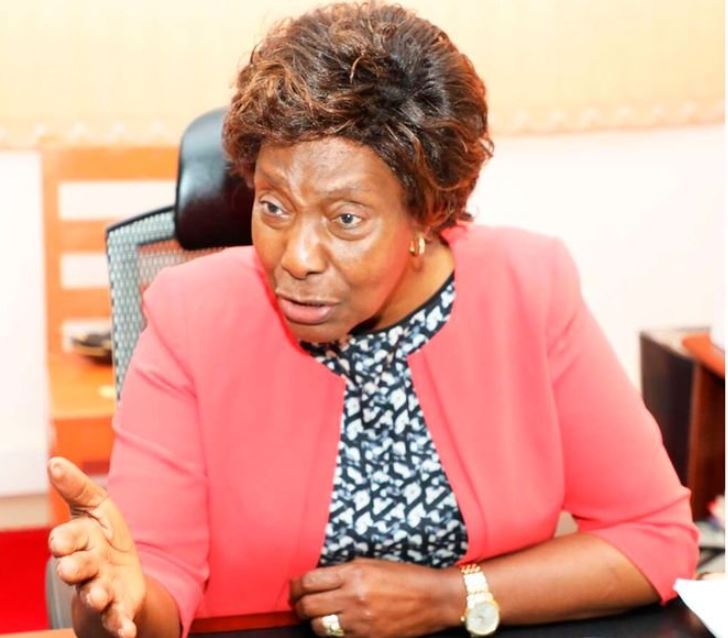
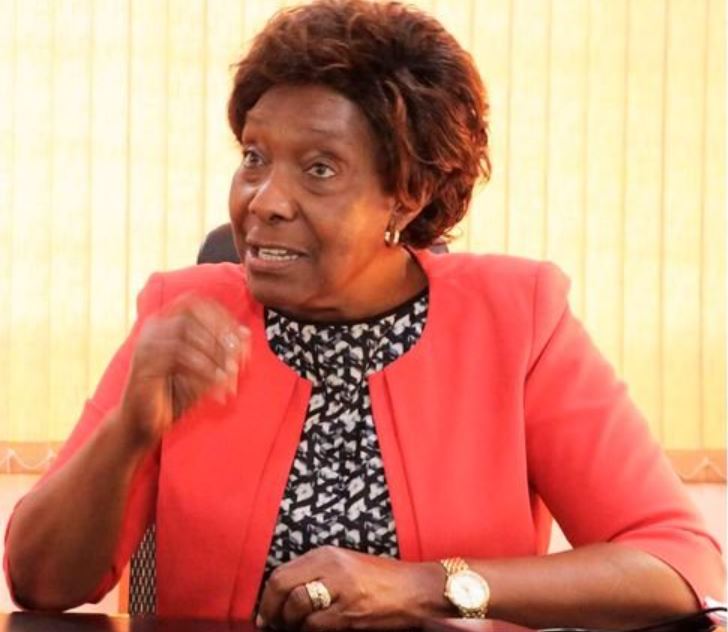
In Conversation With Charity Ngilu

Kitui Governor Charity Bgilu speaks to The Nation in a wide-ranging interview about among other topics; the problem with Kenya’s politics, the ideological divide between Raila and Ruto, and how she escaped an assassination attempt.

Why didn’t you attend the Intergovernmental Budget and Economic Council (IBEC) meeting called by Deputy President William Ruto on Monday?

I do not attend things that do not bear results.

Isn’t that a bit harsh? As a governor, why wouldn’t you want to attend a national forum where economic ideas meant to uplift counties are discussed?

That’s exactly my point! If he has been chairing them for the last nine years and he has never come out to say that this is what needs to be done in the counties, why should I listen to him now? I would care if he was calling such a meeting to tell me how to train my young people in Kitui to make shoes, belts, bowls or garments. Why would I attend a meeting that is empty? A meeting that is not giving people anything? He might have money, but he does not have the ideas.

What if someone else, other than the DP, was chairing the meeting? Would you have attended?

Probably. He and the President came up with the policy of the Big Four Agenda, what happened to it? We have never had him talk about it. What is this thing he is selling to the people; that he is going to bring you from bottom to up? How? When you look at what we are doing in Kitui, is this not very impressive?

But some say that since he is not the president, you really can’t blame him for the collapse of the Big Four Agenda.

We know the years he has been in leadership; what does he have to show for it? Giving handouts to the youth?

It’s apparent the bad blood between you and Ruto runs too deep, what’s the beef?

I have been at this thing for a long time trying to see the country on the right trajectory but Ruto is only out to use people’s status, specifically poverty, to ride to power. When I see these young people, I see the huge potential in them, whether educated or not. It is about building their skills, not giving them handouts.

What we are making here at Kicotec (Kitui County Textile Centre) is what used to come from China, Turkey and other countries. Do they need us to employ their people? No, we just bought the machines from them and the garment making is done the same way world over. Once we make the garments, we sell them and give these people, the young people and the officers working here, a livelihood.

Then there is the Tangatanga label; it’s interesting that he takes it very positively. If, after working this hard, one day somebody calls me Tangatanga, I would be very livid and I would ask myself: “How is it that, despite the good work I am doing, somebody would call me Tangatanga?” The phrase tangatanga means to wander aimlessly in English.

And in the book of Job 1:7, the Lord said to Satan: “Where have you come from?” and Satan answered, “I have been wandering around the earth, going back and forth in it.” And we know Satan had no noble agenda when roaming around. Now why should someone be happy with that tag? The President was telling the country that Ruto is just a roamer. That is what I learnt.

Are you implying that the DP is riding on mass poverty to gain political mileage?

Yes. We are making shoes, belts and non-pharmaceutical health products here. Show any of such initiatives he’s involved in. I never knew Kitui people could ever make hand sanitisers, but that is what we are doing here. That is what leadership is supposed to do: to guide and show people what to do and let them excel.

If I had more money, more resources, I would buy more machines, train more young people and therefore employ even more. Everything is about leadership. Everything rises and falls on leadership. That is what (John Calvin) Maxwell (an American author, speaker, and pastor) said, not me. If you see things are not working well, it is because the leadership is not working well.

You have been pushing for the former Nasa colleagues to come together once again to face off with the DP. Do you believe he is such a formidable force that to defeat him all these political actors must work in concert to oppose him?

I just told our people that we know where good leadership is. And because I know good leadership, I am telling them, this is a very good leader, let’s support him. Unity is the way to go. Prime Minister Raila Odinga is already doing it. Azimio la Umoja is bringing people together. Unless we work together and unite, we are not going anywhere.

Why, then, are you excluding DP Ruto from that call of unity?

You need to think about ideology, about what someone believes in. Raila has historically believed in a properly democratised nation where everybody has his or her say; where each person’s voice can be heard and you can go out and work without fear or favour from anybody. Raila fought for devolution and that is how you are now sitting in a governor’s office. He said we needed more resources on the ground and devolved units where people can be given faster services by people they elect, not appointees.

The provincial administration had become a demagogue that made people very unhappy, now you see people walking in here. Do you think there is a demagogue seating here? No! Because they know they only have five years to retain you or kick you out. That is the difference. Two, when we fought to bring change through the constitution in 2010, Ruto opposed it.

At that time he would rather have the Kanu constitution. He did not want devolution. In 2020, as we were trying to have the BBI to have better people’s representation and resource allocation, he opposed it. What business would I have with such a fellow?

How come all the brilliant minds in the Handshake team never saw the death of BBI coming? How come you never saw the legal minefields?

I can only say that there are many people who may or may not have understood it. Remember that, in 2010 when we passed this constitution, faith-based organisations opposed it, but devolution has worked very well for many people. The fall of BBI was a conspiracy by those who don’t believe in empowering the masses, it didn’t come as a surprise.

True, development has been devolved, but so has corruption…

This issue of graft in counties is grossly exaggerated. The bulk of it is political hatred and rivalry. When I was elected we bought a brand new CT scan machine, then none other than our Senator, Enock Wambua, went to the EACC and said the machine was a donation, and that it was secondhand. The EACC paid us a visit. I told them: “Hey, this is the money we paid, this is the company we paid, and here is the receipt.” The other day we bought trucks to help livestock farmers to deliver their animals to markets. The same man accused me of corruption.

Kitui County is 30,496 square kilometres; that’s one and half the size of Rwanda or ten times that of Kirinyaga County. Animals walking from one end to the other die on the way. When you truck them, they do not lose any weight and so their value does not depreciate. For me, most of the graft allegations are just exaggerated.

You’ve been around for a while now. Being a woman in politics, what are some of the highs and lows and how did you balance between politics and family?

It is very difficult to balance your life and give people time. For instance, look at the time you have been waiting. I really feel I should have given you immediate attention and finished with you. At the same time, I have my family members calling me. And then there are also other people who want to come and sit and feel good and you need to ask them very politely what exactly brought them to the office. You have to be very polite.

For women, it really is harder because you are balancing between your office, family, children, friends, politics and even your own self-time. Churches are waiting for you on Sundays, schools are waiting for you, there are burials and weddings to attend… name them. The telephone never stops ringing. They (voters) cannot understand why you did not pick their phone.

And when they call, they ask: “Governor, do you know who is speaking?” Now, you must say yes, even if you don’t. The assumption is that since they voted for me, I must know each and every one of them by name. They also do not like people around you, I mean the handlers, advisors or PAs. They say they are the ones making me inaccessible. They say we never elected these people here, we only voted for you.

Balancing this thing is very difficult; that is why a lot of women find it very difficult getting into office. If they must succeed, they must have very strong support from their families and if they are married, from their husbands. My husband supported me, he was there every time. Wherever he was, he told people I was the best MP. I miss him and I feel sad he is not around to be with me as the governor now and see the journey I have travelled. He would be proud of me. A woman needs all the support, from the spouse especially. Men are supported so much by their wives and I wish all women also have their husbands to support them.

As a champion of women leadership, do you foresee a time when a major presidential candidate will pick a woman as a running mate? 

Not in any of the coalitions. It cannot be either of the two. I can never work with Ruto. If we get one nominated, by the only one in whose hands we are safe, it would be a very nice thing.

Why is it so?

Some of us have sets of values we believe in. It will be a tragedy to have a woman supporting that one. No.

You missed death by a whisker in an incident that killed former Kitui mayor Martha Mwangangi in 2016. Who was after your life?

It pains me so much. In fact every time I walk in the streets of Kitui, that is the only thing that comes to my mind. I walk out from here and again I know the people who killed my friend Martha also wanted to kill me and they were part and parcel of this same county government workers that I am now presiding over. It is very painful.

The other day you had an Azimio rally in Makueni amid murmurs of a deliberate move to sideline Wiper leader Kalonzo Musyoka. It appears all Ukambani governors have little or no time for the regional supremo. Why is that so?

No, we did not sideline anyone. Everybody was invited and the Wiper leader has been part and parcel of Raila Odinga’s cause for all the years. If you remember, in 2007, I was the first person to sell Raila Odinga here. I ran on the Narc ticket and he was the presidential candidate. Kalonzo was a presidential candidate and I did not support him, I supported Raila.

I am always persuaded to believe that Raila Odinga won, but between Kibaki and Kalonzo, whatever happened, they took the seat and we later on worked together. In 2013 Kalonzo joined Raila Odinga, so he sold Raila Odinga in the whole of Ukambani and the Akamba accepted Raila fully. In 2017, again, Kalonzo was with Raila and, again, every vote, with the exception of a few, went to Raila.

There is a raging debate on in whose hands, between Raila and Ruto, the country is safe. What’s your take?

This is akin to choosing between day and night. The only person who can protect this country is Raila Amollo Odinga.

You don’t seem to have any kind words for DP Ruto. What did he do to you?

His leadership style, that’s all. If you have the heart of a leader, would you, when looking for some place to get your hotel visitors’ parking lot, teargas primary school children? In the Bible, 2nd Samuel 12:4 to be specific, a story is told of a rich man who instead of picking a lamb from his huge flock went for the only one from a poor neighbour to entertain his guests. That’s exactly what happened in this case.

Why didn’t you indict him for the alleged crime when you were the Land minister, or were you under pressure to protect those involved? In fact, you told us that some Singh brothers were behind the attempted land grab.

You know… sometimes when you are in government, you must protect it. But the title deed for that piece of land indicated it belonged to ‘Habanse’.

What did the President tell you?

He directed me to go and fence it. I went in with the NYS and did just that to protect the children.

Was the President aware who was behind it?

Absolutely! He was.


source https://nairobiwire.com/2021/11/in-conversation-with-charity-ngilu.html

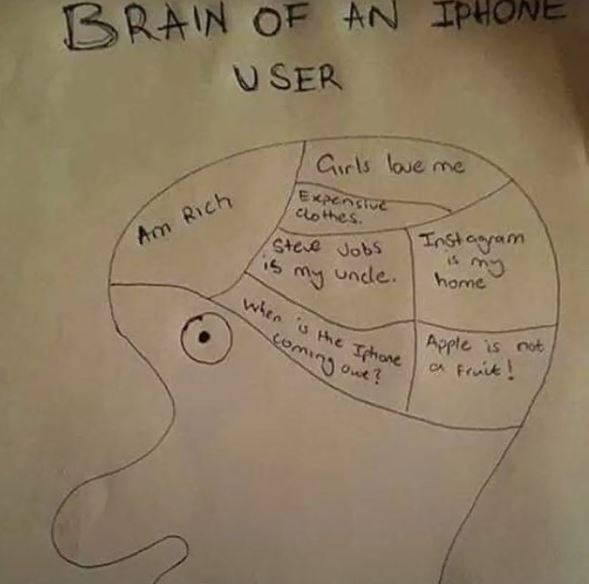
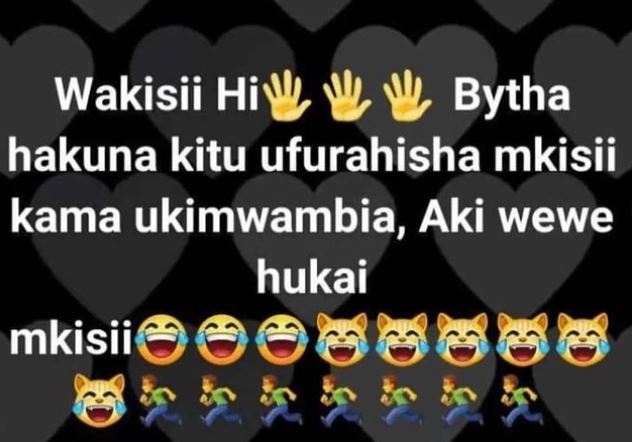
CRAZY: Funny Memes Going Viral on Social Media

Check out our weekly compilation of viral memes trending on the Kenyan interwebs.


source https://nairobiwire.com/2021/11/crazy-funny-memes-going-viral-on-social-media-27.html

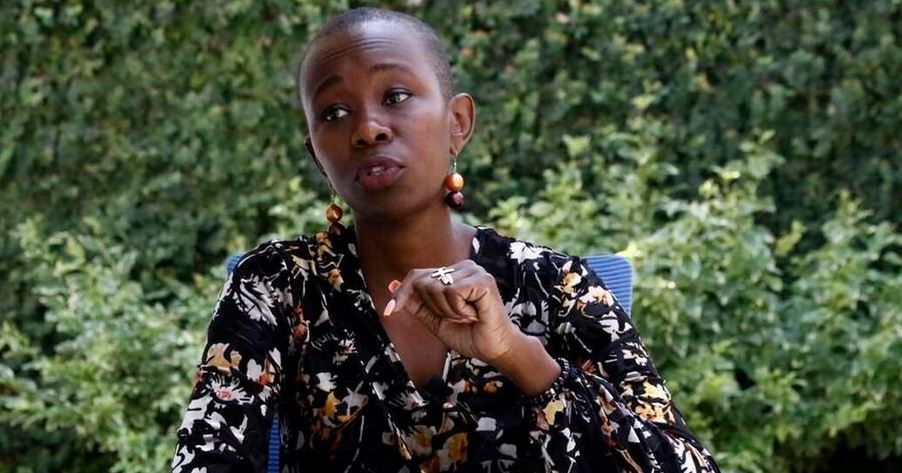
Hellen Njeri Talks Boniface Mwangi, Weston Hotel Saga, ‘Baby Stealers’ Expose

Hellen Njeri Mwangi is an activist, journalist, wife of Boniface Mwangi and a mother of three. As a journalist, Njeri was the brains behind the Emmy-nominated undercover investigative piece, ‘Baby Stealers’.

Njeri spoke to The Nation about the life of activism, the Weston Hotel land grabbing saga, the famous 2009 Jamhuri Day drama at Nyayo National Stadium and how she met Boniface.

Here are some excerpts from the interview.

Who is Njeri Mwangi?

I was born Hellen Njeri to Robert Kang’ethe and Mary Wanjiru from Murang’a in Nairobi 40 years ago, the third-born in a family of four children. I went to Utawala Academy, then known as Administration Police Training College Primary School before joining Naivasha Girls then Daystar University for a degree in communication and public relations.

I grew up in a strict, well-to-do Christian family. I went to boarding school at the tender age of eight, which I struggled with. I was also a worship leader.

How did you meet Boniface Mwangi, your husband?

It was in 2006. I still remember it like it was yesterday. It was on a Sunday after leaving Mavuno Church in Nairobi. I went with a group of friends to Steers along Wabera Street to have some ice cream. Then a guy comes in with a helmet in his hand and a leather jacket, walked past our table then spoke to a guy in front of us in a hushed voice. He reminded me of a star in a programme called Renegade, which I loved. He was a cop, good at his work where he committed the ultimate crime. He had a ponytail and used to ride a motorbike. Boni reminded me of that actor with his helmet.

I watched him from the corner of my eye and to be frank, everything disappeared from that moment on. I don’t remember what we were even talking about. I don’t remember what I said after he came in.
I don’t remember if our eyes locked, I just remember thinking, I would really, really like to meet this guy. It was like that character in the movie had just come out of the movie then went back. He left after a short while.

The guy he talked to came to me and told me he asked for my number as he is a photographer working for Pulse magazine and is looking for a model to photograph.

I was like what does that have to do with me yet I am not model material? But I was like give him my number and let him call me. He did not call me for like a month.

When he finally found an excuse, a reason to call me, he called and told me he was looking for someone to take a photo of for Pulse magazine.

I asked him how much he was paying but he said they don’t pay for such. So I told him since you have a bike you don’t have to pay, but I want a ride. If you give me a ride, then we will have the shoot. It was a deal.
He gave me a ride to Junction along Ngong Road all the way from Buruburu where we lived. I screamed all the way in excitement.

He took me back home at 10pm. I told him we would talk later since it was already late, but we found ourselves talking until 2am just outside our gate.

He told me about his life, growing up, spending time in the streets and that he wanted to be a leader in this country so that he can help the youth to not live the way he had.

His life was like a storybook; it was something I had never imagined having come from a privileged family. We were not rich, but I grew up privileged. So when he told me all these things, I was like completely blown away.

At that point I knew we could not have a relationship because he was on the fast lane, focused and knew what he wanted in life, yet here I am just going round and round like I am chasing my own tail. I knew we were not compatible.

But I completely admired him. I wished him all the best and told him that when he makes it and is looking at the crowd, let him not forget a chick he once met who is rooting for him.

Did he eventually take the photo he wanted?

Yes he did. My dad saw it and said in Kikuyu, “there is something that will come out of this”. I’m not sure what he meant. Maybe it was a blessing in disguise. He was blessing me because then we started dating.

Did Boni make his move?

Not really. He did not have to struggle because I was already smitten. I just went all in as I was taken in completely, sema kumezwa (laughs)… I met Boni when still a virgin at 26 years. The first time we became intimate, he broke my virginity and I got pregnant with our first son Nate.

I had planned my life, that I would start dating at 29 then maybe get a child at 31, but here I was already pregnant and not even married. We kind of fell out after that. I completely locked him out of my life. I was like this guy has ruined my life; you would think I was raped.

This is where effort came into play. He persisted, and that is why I am still with him. He is a real guy and even though he has his faults, he is very consistent. He is also a man of his word.

He told me he was going to be there for me and the baby whether I wanted it or not. He would visit me at the office, send flowers, cakes and come home to visit even though I did not want to see him. He was consistent.

How long did this last?

Five months. He came to my parents and told them he was the father of my baby and he will take responsibility. He said he is not going anywhere and that they’re going to be seeing him around.

I respected him for that. I was like, okay, this guy is here, if it were any other guy, he would have taken the chance and fled. It made me respect him a whole deal.

Nate was born and Boni said he wanted to marry me. But I asked him if he wanted to marry me just because we had a baby together – he said he wanted us both. He also told me he grew up without a father and he would not wish that for his child. I was like, okay. He was a decent guy and my family already liked him.

We didn’t move in together. I insisted we would only move in together after we are married. So I didn’t move out of home until we got married.

We got married exactly a week after the signing of the peace treaty following the 2007/2008 post-election violence.

He was busy taking photos of the violence and we were not even sure the wedding would take place. The country was at war and there were times I didn’t think he was going to come home.

We’re on the phone, then there’s a shootout, then silence and then the phone goes off. Then I call him again, no answer. The phone is dead then in the news you hear a journalist has been killed. It was a very difficult time. But we got married at Club Sailing along Lang’ata Road on March 8, 2008.

How was it like living with Boni as he battled post-traumatic stress disorder after the 2007/08 violence? 

It was the worst time of my life, because like him, I did not know he was going through PTSD. We fought even over the smallest of things. He was easily irritable though he had never taken even a sip of alcohol or smoked.

The year was really difficult for both of us, for him especially because he was struggling with the nightmares and the killings and the people that he saw dead. He visited morgues, he was at the famous Kiambaa Church and so all those images, the sound, the smells, the noises, all those things were really disturbing him.

So because all those things were eating him inside, we really struggled. I remember wanting to go back home enough times.

Thereafter…

We did Picha Mtaani, a street exhibition of the post-election violence in 2010, going across the country in pretty much the hotspots of the violence.

This was to give people all over the country a safe space to cry and open up. So people came to that exhibition, they talked about what happened to them. They talked about what they did. They talked about the injustices. They made pledges that they would never allow something like this to happen again.

This proved somehow cathartic. However, it would have probably helped if we went for counselling, but it kind of checked itself. So we imagined what if we started a place where we use art for this kind of change?

What is your memory of the Jamhuri Day incident in 2009 when Boniface Mwangi booed President Kibaki?

Actually, we had planned a silent protest for many months. We used to have the meetings every Tuesday in our house. We talked about disrupting the celebrations to call the government’s attention to social ills in the country.

The 12 of us would go to Nyayo Stadium and have different people stand in different pews then walk out in unison immediately President Mwai Kibaki stood up to speak. It was to be a silent protest.

Then what happened?

The stadium was packed and I remember watching the TV on the floor and I saw a person being roughed up and I wondered if the guy would survive. I remember saying to myself “Si huyo amefinywa sana”. It didn’t occur to me that the guy was in fact my husband.

Shortly, after I got a call that the guy who was arrested at Nyayo was Boni. My mother and sisters came home. I remember Caroline Mutoko and Paul Muite called me to tell me not to worry they will look for my husband.

He was later found in Industrial Area before being moved to Lang’ata Police Station. They then took him to hospital as he was badly beaten. I talked to him on the phone and he told me he was not that much hurt and he would spend the night at the police station.

When he came back, we did not really talk about the incident as we had just lost a baby. We were just glad that we were both alive.

After the near-death experience, did you then say this is it, I am not doing this activism thing anymore?

No. We had made the choice. I had chosen Boni with everything he came with. I will only tell him that sometimes we need to change tact. But he is never easy to change so we have always fought over this.

Is there a time when you wanted to stop?

That was in 2016 when Boni had a tiff with Deputy President William Ruto after we led demonstrations over the grabbing of the Lang’ata Primary School playfield by Weston Hotel, which is associated with him. The DP’s people were not happy; going home, we always had to look over our shoulders.

I am driving and thinking “what if someone on a motorbike just shoots thinking it is Boni in the car?” Many questions. It became difficult to even just take a walk. So you start becoming afraid not just for yourself but for the children too because whatever will happen to me or him will affect our children.

It became too much and I said I cannot stay in a space where I’m looking over my shoulders every time and my children could not go out to play because they might just be kidnapped.

So we left the country only to come back when the 2017 elections were around the corner.

What were the threats like? Were they verbal or physical?

During the launch of Boni’s book in November 2016, someone walked up to me and gave me a letter. But even before that, Boni always had that gut feeling about something going wrong and asked for security during the launch.

The fact that somebody walked up to me and gave me that letter, we don’t know whether that is the way it would have been done.

It was a very long letter but it said there was a plan to harm me or the kids because Boni had messed with the DP’s reputation. It detailed the things that could happen. But I never experienced anything directly.

How did PAWA254 come into being?

After the successful Picha Mtaani initiative, we thought of opening a place where photographers and different artistes could come and do exhibitions, we can shoot for fun for a change and all that. We can also equip people with photography skill. So then we opened PAWA254 in 2011.

We built the place and we got a lot of interest from all kind of artistes. Because of Boni’s profile, it grew fast.

It was a space where artists could come to network, work together and you know, do stuff together. But then it became this big thing.

People came to us to support the initiative and we began receiving donor funding to provide that platform for emerging talents.

We needed money because corporates wanted to work with us but could not because of fear of backlash.

They did not want to be identified with us even though they applaud Boni’s work in other platforms.

It was that situation of “we want to work with you but we don’t want to be seen working with you”. Fast forward – Boni leaves the organisation because he’s running for office as Starehe MP.

How did that affect the organisation?

People still think that Boni is PAWA and PAWA is Boni. So when he leaves, people feel PAWA is not what it used to be. They want him in, but at the same they don’t want him. It is a catch-22 situation. Donor priorities also started shifting and so is the support we used to get.

Do you see any of your children taking after you guys?

Yes, but maybe not in the way that we do. But yes, I do. Probably all of them but more so my daughter because she’s very feisty. She can be very forceful when she has a point to make and it has landed her in trouble time and again in school.

Your love for biking, how did it start?

It was fuelled by the Renegade movie and then the ride with Boni took it a notch higher. Nowadays, I just enjoy riding myself.

How did you become a road safety ambassador?

We have lost many friends on the road but when we lost a very close friend called James Quest in 2016, I said I have to do something.

The undercover expose?

I am a journalist in another life. I am doing freelance work with BBC and the story about stealing babies was because a friend of mine narrated to me how many women in Nairobi have lost their children in hospitals, so I decided to investigate it.

We did not anticipate what we found out. The social workers at Mama Lucy Kibaki Hospital charged with the responsibility of taking care of these children were actually taking advantage and selling those children.

The story got an Emmy nomination and Amadi Prize for prestigious journalism around the world. It was also nominated for the Rory Peck Award.

I am working on another piece with BBC which has been delayed a bit but hopefully by the beginning of 2022 we should be able to put it together.

Were you misquoted in the “don’t identify us with our husbands” story that trended on social media?

What I said was that we don’t want to just be identified by our husbands’ name because we also have names. It is not that we don’t love our husbands, but just call me by my name.

We are very proud to be associated with our husbands and if we weren’t, we would not be with them.
Even if the person is prominent hence the prominence value but don’t ignore the invisible work we do to have him there. By the time you’re identifying that man, you don’t know the struggles and tribulations that man has been through, that we as a family have been through.

Any future political ambitions?

I do not have those ambitions for two reasons. One, the way politics is in this country, it is such a tedious job.

Then, we have children, and that is why I don’t even entertain such a thought, because I want to be there for my children.


source https://nairobiwire.com/2021/11/hellen-njeri-talks-boniface-mwangi-weston-hotel-saga-baby-stealers-expose.html

Hilarious Posts by Kenyans on Social Media for the Monday Blues

Scroll through for your weekly dosage of random and humorous posts going viral on the interwebs.


source https://nairobiwire.com/2021/11/hilarious-posts-by-kenyans-on-social-media-for-the-monday-blues-5.html

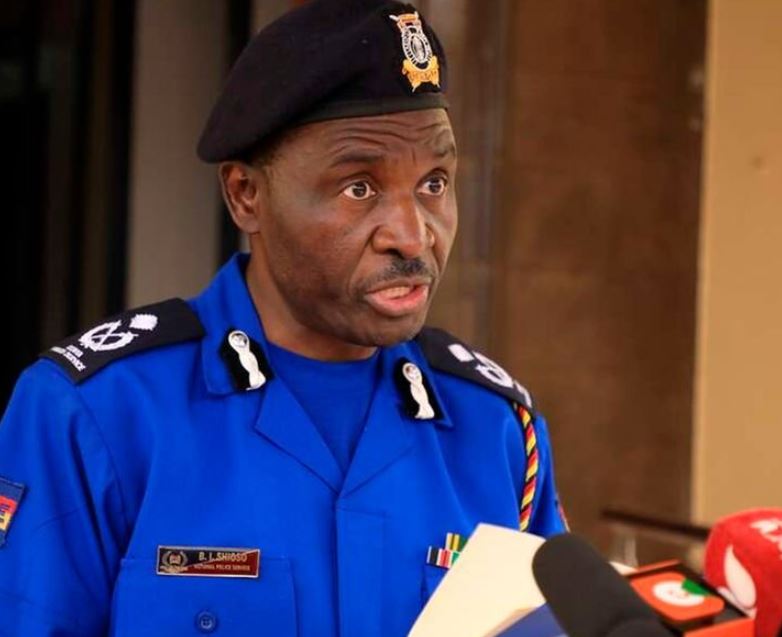
Q&A With Police Spokesman Bruno Shioso

The National Police Service Spokesman Bruno Shioso fields questions from the public via Sunday Nation.

This month, some police officers will have to source for advances to supplement their income after receiving slashed salaries. This salary and promotions problem has lingered since 2018. Are you concerned that the move to cut their salaries will affect their morale and increase cases of officers engaging in criminal activities? Is there something being done to address this matter once and for all? Evans Njogu, Utawala

I do empathise with the affected officers since no one can bear with diminished earning capacity. That said, this is a legal and policy issue rather than an administrative one. It is also a cross-cutting issue affecting the National Police Service Commission (employer), NPS, Salaries and Remuneration Commission, Judiciary and other actors such as the Treasury.

Therefore, it is well beyond my pay grade or NPS’ intervention. I invite you to familiarise yourself with the Court of Appeal ruling in Civil Appeal No. 352 of 2019 (delivered on 23/09/2021). In summary, the Court of Appeal ruled against the position advanced by the aggrieved officers. That, unfortunately, is the position that we must not only respect but enforce too.

When the current Inspector-General of police took office, he published a Gazette notice detailing those who have right of way on Kenyan roads. He identified five categories with less than 30 offices. The publication of this notice brought hope that finally the anarchy on roads would be addressed. Unfortunately, this notice ended up being a public relations exercise. Today, observance of traffic regulations is voluntary. Drivers of government and county vehicles along with those of public corporations have been joined by MPs, MCAs, and county officials in competing with matatus to determine who can be most obnoxious to other road users. What is the NPS doing to restore sanity on our roads? Mike Johan

True, Mike, the policy was published by the IG and it is still valid and in force. Your concern, which I wholeheartedly agree with, tells of a much bigger story about the collective character of Kenyans than it tells on the capacity of police to enforce the laws and policies. I think first we as Kenyans and also road users need to cultivate a basic sense of road discipline, courtesy and good manners generally. This should be the preventative baseline , rather than focusing on more laws and police actions. Or are we going to blame the police for our bad road manners too?

Why did the Anti-Terrorism Police Unit (ATPU) raid the headquarters of the Prisons Service in commando-style to arrest the former Prisons’ boss? Was all that force necessary? Don’t you think the act was humiliating both to the outgoing boss and the image of the correctional service at large? Andrew Maranga Ratemo, Nairobi

Andrew, firstly, ATPU never “raided” Prison’s headquarters, but responded to a distress call, whose specifics I would not get into now. Their posture as seen on TV was merely an issue of police techniques, especially when responding to a call without having the benefit of the details upfront.

In developed countries like the USA, show-of-force is a standard police procedure when responding to all calls, including of a lost pet! Officers were simply on high alert and weren’t taking any chances. And as a correction, the Commissioner-General of Prison was never arrested.

There were several versions of the chaos that erupted during DP William Ruto’s recent campaign tour of the Nyanza region. That the DP gave out money to be shared among the boda boda riders, but some people made away with it, hence leading to chaos; and that the police had intelligence reports the previous day indicating that there would be chaos but did not act on them. Which version should we believe? Erick Ole Agade, Busia

Erick, when faced with a situation of conflicting official information or narrative, always stick to the police version. Police are authentic, objective and reliable. We don’t have interest in public (political) discourse but pursue only facts as they are.

And let me add that in addition to our mandate of official investigations – which gives us a comparative advantage on the quality of the news we share – we are also well represented at the grassroots so we get first-hand information. Beyond that, we utilise other capabilities, including intelligence, forensics and technology.

Therefore, what we share from headquarters is an outcome of a laborious effort by many actors to feed Kenyans with objective reality. I, therefore, encourage you and others to always trust the police version of narratives since you can always hold us to account.

One of the fundamental principles of community policing is to make the police and the community work together. However, the police force is largely very unfriendly towards community members. What is being done to address this apprehension? David N. Ndungu, Kilifi

True, David. This is one area greatly responsible for tensions in the police-community relations, hence impacting negatively on good policing outcomes. It is an area police reform is focused on, and that is why community policing is a big plank of the ongoing police reforms. We are addressing the drivers of this unfortunate reality, and we shall in the fullness of time bring police and the public together.

We are fully aware we can’t be effective without the full cooperation of the public. You saw the role the public played recently towards the recapture of the prison break trio. That is the direction we aspire towards. But it is a process.

Reforming such a big organisation with an entrenched culture is no mean feat. The USA has been reforming for more than 60 years now, and still have trust deficit issues. Our reform journey is still in infancy – a mere 10 years – and we are acknowledging our weaknesses and building on our strengths.

We need the support of the public, first by giving us the benefit of doubt, then working with us. So much is already happening in the counties where frontline policing is taking place.

In Nakuru County for instance we have a football initiative to bridge to normalise relations. In Tran Nzoia, we have a senior commander who employs singing to reach out to disadvantaged kids. And much more policing innovations are happening with great impacts.

The IG banned the erection of roadblocks without approval. While the physical roadblocks are gone, the police still man those spots with the sole purpose of extorting money from motorists. When are we going to see the end of this? David N. Ndungu, Kilifi

The roadblocks policy is well communicated and enforced. Roadblocks should be for a specific purpose and time-bound. Roadblocks are meant to detect criminal offences and not traffic violations. Traffic operations should be mobile, not static.

Therefore, whenever you come across lone officers on the road stopping cars, be a good citizen and make a report, even on the NPS Twitter account and action will be taken. This is an area the IG and Deputy IG of the Kenya Police Service are very passionate about.

All roadblocks and traffic checks must be sanctioned by local commanders, who are held strictly accountable to the IG and DIG KPS over the performance of their officers.

As police continue to attract negative publicity, including cases of brutality, extrajudicial killings and corruption, Kenyans ask themselves whether the much talked about police reforms ever took place or bore any fruits. Sir, what is your take on these observations? Komen Moris, Eldoret

Dear Komen, police reforms are not only real and ongoing but the greatest strategic agenda ever undertaken in the history of our police. Reforms don’t easily happen, even with the best corporates. It is a great feat that NPS has soldiered on this far. If you doubt this, just try to reform your own life or even family and see how hopeless it gets!

We have a clear roadmap, and have our priority areas right and well mapped out. We also have the buy-in of the rank-and-file who are keen to turn the page for the better. So far, much ground has been covered, but we still keep our focus on the prize; to bring the police and public to the same policing table to design joint interventions on security, peace and safety. And in all this, we remain grateful to the government through the Ministry of Interior for their unwavering support The Government is keen to see NPS succeed in this transformative effort.


source https://nairobiwire.com/2021/11/qa-with-police-spokesman-bruno-shioso.html

My Vision is to Restore Nairobi to “A Place of Cool Waters”

Dr Elizabeth Kimani-Murage is a senior research scientist at The African Population and Health Research Center (APHR).

The researcher speaks about her vision for Nairobi, her journey and more.

You recently won the global 2050 Food Systems Vision prize. Your vision for the award is to restore Nairobi to “A Place of Cool Waters” – A food secure, healthy, environmentally friendly urban space, where all people live in harmony and peace in the spirit of “Ubuntu”, what does this mean?

This vision is to restore Nairobi to its original place – a place of cool waters  — through a transformative, regenerating and human-centred food system. Nairobi (Enkare Nyirobi) was named as such by its indigenous inhabitants, the Maasai people, meaning “the place of cool waters” referring to cool rivers flowing in/through it.

Nairobi was clean and green and the Maasai people grazed their cattle in it. It has also been referred to as the “Green City in the Sun”.

Nairobi today is a degraded urban space. The green spaces have generally been replaced by a concrete jungle that is already encroaching into neighbouring counties like Kiambu County that feed it. A majority of its residents live in informal settlements characterised by high levels of food insecurity, malnutrition and poor health. This is despite the fact that a lot of food is dumped in dumpsites, where many urban poor scavenge for food, while others sleep hungry.

Capitalism has led to commodification of food so much so that if you do not have money, you do not have food. Further, due to food commodification, food sold in markets in the city, majorly coming from rural areas, is not safe as it is grown through unsafe use of agricultural chemicals to increase yield.

Through various strategies under the Vision, we will promote access to adequate and healthy food so that people feed themselves in dignity. We envision that all this will lead to a food-secure and healthy environment, where people live in harmony and peace, in the spirit of Ubuntu.

What challenges do you go through during your work and how do you solve them?

Ever heard of the saying – “Publish or Perish” associated with academic institutions? Career progression for a researcher depends a lot on their academic productivity. One has to often conceptualise new ideas, raise funds to implement the ideas, publish the new evidence from the research, and engage policy with the evidence. That is the cycle.

How has the journey been?

In my journey towards where I am today as a researcher, I have published tens of research publications. Sometimes you submit a paper to a journal and it gets rejected. You have to revise the paper and resubmit to another journal – that is the life of a researcher – and one needs to know this well, so as not to give up along the journey.

Another challenge is work-life balance. I often have to work more than 100 per cent of time to finish on deliverables, and I have a family to take care of. Balancing all that is often a challenge. I have learnt to deal with this through proper leadership – I have been trained and mentored on leadership — proper planning, prioritisation and delegation. These are key in success.

What gives you the greatest fulfilment and encouragement?

Being able to inform and drive change in people’s lives through my work gives me a lot of fulfilment and encouragement. Through my research work I have informed policy formulation and implementation in Kenya to promote health and wellbeing of Kenyans and Africans in general. These include policies around the baby friendly community initiative, workplace support for breastfeeding and human milk banking.

I am particularly happy about the Zero Hunger Initiative that I have initiated at APHRC, based on the Food Systems Vision. This is aimed at promoting freedom from hunger and the right to adequate food for people in urban areas in Kenya, and eventually the wider Africa, while promoting a healthy environment in urban areas.

Growing and mentoring the next generation also gives me a lot of joy and fulfilment. I have mentored many young people in research, through supervision as colleagues, internships, and supervision of masters and PhD students. I have also mentored young people who work in urban poor settings as change agents in their communities.

What advice can you give to up-and-coming women who are interested to take after you?

Diligence pays! I will tell them what my mum always told me, “Nothing good comes along easily”, meaning that one, and particularly a woman, has to work hard(er) to make it and thrive in their careers and in life generally. I single out women because it is only women who have to carry babies for nine months in their wombs, who breastfeed babies among many other life responsibilities. These (extra) responsibilities are usually not taken care of when it comes to academic requirements, promotions at work, and grant applications among many career responsibilities.

What do you enjoy most about your work? And why?

Freedom to think, freedom to execute work, freedom to influence. The work of a researcher provides a lot of freedom and opportunity. A researcher is often their own boss – they decide what projects they initiate. This is because they write their own proposals and make grant applications for the projects they want to implement, design the projects and execute according to their plans. My workplace is a good work environment and it promotes this freedom.

What is your ideal day like?

Currently, my day is long and full! I am a mother, a wife, a researcher, a leader, and a student. But all fit in the day.

What drives you?

I am passionate about justice! I have a vision for a just world; where human rights are protected, respected and fulfilled; where no one sleeps hungry or relies on unhealthy food; and where people live in harmony and peace, in the spirit of Ubuntu.

Women you look up to?

I really admire my mum, not just because she is my mum – but because I have learnt a lot from her. She has shared a lot of wisdom with me, which guides me in my daily life. I always find myself using the wisdom she shared with me when I was growing up. She often used Kikuyu adages to inspire.

Dr Catherine Kyobutungi has influenced my path a lot. She is my big boss, an intelligent, effective and gracious leader. She has made a lot of impressions on me through her way of leading and through her words. Then there’s Prof Paula Griffiths in my research work

Future plans?

I am building a legacy of justice in future; I see myself promoting justice –in different ways — through the kind of work I do today – action oriented research and programmes especially to promote freedom from hunger and the right to adequate food for all – Universal Food Access. I see myself teaching law part time in a university in future, focusing on human rights, particularly the economic, social and cultural rights.


source https://nairobiwire.com/2021/11/my-vision-is-to-restore-nairobi-to-a-place-of-cool-waters.html